
63 Amps Three-Phase Line Impedance Stabilization Network
- Provides CISPR-compliant 50/250 µH +5Ω network for stable three-phase EMI measurements.
- Supports 9 kHz–30 MHz testing with consistent impedance and strong isolation accuracy.
- Handles up to 63A continuous per line, ideal for medium-to-high–power 3-phase EUTs.
- Offers remote or front-panel line switching for repeatable, controlled measurements.
- Uses air-core inductors to eliminate saturation and maintain stable impedance under load.
- Maintains compliance with CISPR 16-1-2 and ANSI C63.4 for commercial EMC approvals.
- Useful in labs testing drives, HVAC units, automation systems, and power converters.
- Supports extended-duration EMC workflows using dual cooling fans for thermal stability.
- Includes NIST-traceable calibration covering impedance, phase, insertion loss, and isolation.
- ISO 17025 accredited calibration available on request for formal regulatory test programs.
-
Frequency range: 9 kHz to 30 MHz for conducted emissions measurements
-
63 A maximum continuous current per line
-
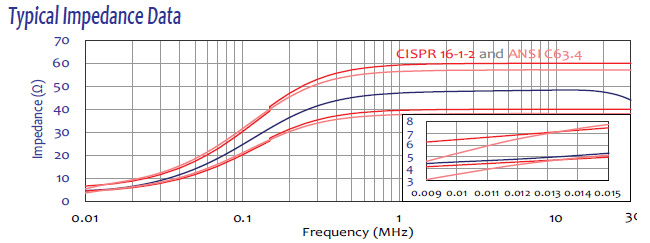
CISPR 16-1-2 & ANSI C63.4 compliant four-conductor LISN
-
50 Ω, 50/250 µH +5 Ω network for 3-phase Delta & Wye power systems
-
Remote or local line switching (L1, L2, L3, N) via RLI-100
-
Integrated transient limiter with filtering and attenuation
-
Air-core inductors to avoid saturation and permeability swing
-
Dual cooling fans for improved thermal stability under load
-
50 Ω N-type RF measurement port
-
Includes required connectors & fiber-optic cable
-
Three-year standard warranty
General
-
Product Type: Line Impedance Stabilization Network
-
Application: Power-line conducted emissions testing
-
Standards: CISPR 16-1-2, ANSI C63.4
-
Network: 50 Ω, 50/250 µH +5 Ω, 4-conductor
-
Frequency Range: 9 kHz–30 MHz
Insertion Loss
-
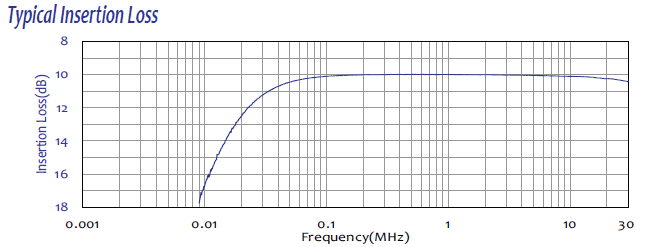
9 kHz–150 kHz: <17 to <11 dB
-
150 kHz–30 MHz: <11 dB
Isolation
-
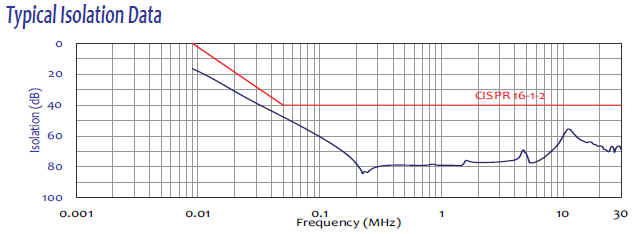
9 kHz–50 kHz: >0 to >40 dB
-
50 kHz–30 MHz: >40 dB
Input Power Ratings
-
Max Current: 63 A continuous per line
-
AC Voltage: 865 V rms (L–L), 500 V rms (L–G)
-
DC Voltage: 600 V DC
Electrical / Connectors
-
Receptacle Pins (input): 63A, color-coded
-
Input Plug Sockets: 63A
-
Output Receptacle Sockets: 63A
-
Output Plug Pins: 63A
-
RF Port: 50 Ω N-type (female)
-
Fiber Optic Ports: Avago duplex POF jack
-
Remote Power: 6 VDC, 500 mA
-
Fan Power: 15 VDC, 500 mA
Environmental / Cooling
-
Operating Temperature: 5–40 °C
-
Cooling: Dual internal fans + louvered ventilation
Product Weight
-
Weight: 89.2 lbs (40.5 kg)
| Title | Link |
|---|---|
| LI-3P-263 Datasheet | View PDF |
🔍 Not Sure This Is The Right LISN?
Compare all 25 Com-Power LISN models side-by-side with our interactive selection tool. Filter by current, voltage, frequency, and standards to find your perfect match.
Compare All LISN Models →LI-3P-263 V2.0 Three-Phase V-AMN LISN FAQs
What is the LI-3P-263 and what industrial equipment power class does it address?
The LI-3P-263 is a four-conductor, 50Ω, 50/250 μH +5Ω three-phase Line Impedance Stabilization Network (LISN), also known as an Artificial Mains V-Network (V-AMN), rated at 63 amperes per phase. It is designed for conducted emissions compliance testing of high-current three-phase industrial equipment — including large variable frequency drives, high-power three-phase EV chargers, industrial chillers, three-phase UPS systems, and renewable energy inverters — that require V-network measurement methodology and a current rating beyond the 32 A LI-3P-232.
What frequency range does the LI-3P-263 cover and why is the 9 kHz starting point important for high-power equipment?
The LI-3P-263 operates from 9 kHz to 30 MHz. High-power three-phase equipment such as large VFDs, multi-megawatt solar inverters, and DC fast chargers typically operate at switching frequencies below 20 kHz, generating significant conducted disturbance energy in the 9 kHz to 150 kHz sub-band. Without a V-AMN LISN starting at 9 kHz, this disturbance content would be missed entirely in a standard 150 kHz to 30 MHz test. The LI-3P-263 ensures full regulatory coverage from 9 kHz in a single measurement setup.
Which EMC standards does the LI-3P-263 comply with?
The LI-3P-263 is fully compliant with CISPR 16-1-2 for CE marking and ANSI C63.4 for FCC testing. It supports AS/NZS, VCCI, ISED Canada, and other international frameworks referencing CISPR 16-1-2 V-network methodology.
What are the maximum EUT power ratings for equipment connected to the LI-3P-263?
The LI-3P-263 supports 63 A per phase continuous, 865 V RMS line-to-line, 500 V RMS line-to-ground, and 600 V DC. On a 400 V three-phase supply, 63 A corresponds to approximately 44 kVA, covering a large segment of high-current industrial three-phase equipment.
Why does the LI-3P-263 use three internal forced-air cooling fans rather than passive cooling?
At 63 A per phase, thermal dissipation in the air-core inductors and internal wiring is substantially higher than at lower current ratings — beyond the capacity of passive convection cooling. The LI-3P-263 incorporates three user-controlled internal fans drawing air through three 4.5-inch circular rear-panel intakes and exhausting through six 4-inch square mesh-protected top-cover outlets. This active cooling allows continuous operation at rated current without thermal derating during extended compliance test sequences.
How does the V-AMN 50/250 μH +5Ω topology enable accurate measurements at 63 A without compromising impedance accuracy?
The LI-3P-263 uses air-core inductors throughout the 50/250 μH network. Air-core construction ensures inductance values remain constant regardless of the 63 A current, as there is no ferromagnetic core to saturate. This preserves the CISPR 16-1-2 V-network impedance characteristic with full accuracy at all load levels.
How does the LI-3P-263 remote switching capability improve safety when working with 63 A rated EUT?
The RLI V2.0 Remote LISN Interface allows the operator to switch L1, L2, L3, and Neutral via a 10-meter fiber optic cable from outside the test enclosure. At 63 A, power cables are large and energized — remote switching removes the need for operators to enter the shielded area between measurements, eliminating the risk of accidental contact with high-current connections and avoiding disturbances to the EUT operating state.
What does the bypassable transient limiter on the LI-3P-263 protect against and when is bypass useful?
The Transient Limiter protects the EMI receiver from high-energy switching transients generated by large drives, rectifiers, and capacitor bank switching events. Two 5 dB attenuation pads provide additional impedance matching and receiver protection. The limiter can be bypassed from the front panel or via the RLI V2.0 for raw disturbance voltage diagnostics, pre-compliance work, or when a standard requires no limiter attenuation at the measurement port.
What insertion loss and isolation does the LI-3P-263 achieve across 9 kHz to 30 MHz?
Insertion loss decreases from less than 17 dB at 9 kHz to less than 11 dB at 150 kHz, remaining below 11 dB through 30 MHz. Isolation increases from greater than 0 dB at 9 kHz to greater than 40 dB at 50 kHz, then exceeds 40 dB through 30 MHz — meeting all CISPR 16-1-2 V-network requirements.
How does a typical 63 A three-phase V-AMN conducted emissions test setup work in practice?
The LI-3P-263 is installed on a conductive ground plane and bonded to it via its unpainted mounting plate. The facility three-phase supply connects to the mains input using the 100A rated connectors. The EUT connects to the EUT output port. A 50Ω N-Type coaxial cable connects the RF measurement port to an EMI receiver configured for 9 kHz to 30 MHz. The RLI V2.0 fiber optic cable exits the shielded room through a waveguide penetration. The operator runs sequential sweeps on L1, L2, L3, and Neutral as a single automated test run while the EUT operates at rated load.
In which high-power industrial test environments is the LI-3P-263 most commonly deployed?
The LI-3P-263 is commonly deployed in industrial automation labs testing large servo drives and CNC machine power supplies, EV fast charging qualification labs testing 44 kW class DC chargers, renewable energy test facilities measuring solar inverters and wind converters, industrial refrigeration and HVAC test environments, power quality and UPS test programs, and commercial EMC compliance labs regularly testing high-current three-phase equipment.
Why does the LI-3P-263 use 100A rated connectors when the LISN is rated at 63 A?
100A rated connectors provide a meaningful safety margin above the 63 A continuous operating current, accounting for startup inrush currents, harmonic content, and thermal derating in high-ambient environments. Oversizing the connectors also reduces contact resistance and associated heat generation during long-duration continuous operation.
What grounding and earth bonding requirements are critical for the LI-3P-263 at 63 A?
The unpainted mounting plate must be bonded directly to the conductive ground plane with a low-impedance metal-to-metal connection. At 63 A, leakage currents through the chassis can be substantial, creating a genuine shock hazard if the earth bond is incomplete. The bond also maintains the impedance reference required by CISPR 16-1-2. In facilities with non-conductive floors, a dedicated copper bonding strap from the mounting plate to the building earth point is required.
How is the LI-3P-263 calibrated and what calibration documentation is supplied?
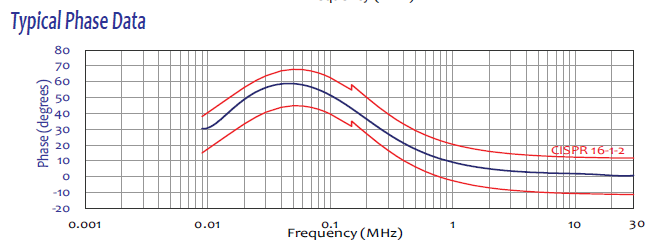
Every LI-3P-263 is individually calibrated per CISPR 16-1-2 and ANSI C63.4. Full calibration data covering impedance, phase, isolation, and insertion loss across 9 kHz to 30 MHz is included with each unit along with a certificate of calibration. ISO 17025 accredited calibration is available upon request.
What is the physical size and weight of the LI-3P-263 and how does this affect laboratory planning?
The LI-3P-263 measures 30.41″ deep × 25.33″ wide × 17.36″ high and weighs 118.94 lbs (53.95 kg). The substantially larger size reflects the heavier air-core inductors, 100A connectors, and active cooling system required for 63 A continuous operation. Laboratories should plan for adequate ground plane floor space, a suitable lifting mechanism for installation, and confirmed availability of appropriate three-phase supply cabling to the test area.
How does the LI-3P-263 support both local and remote operation in an EMC laboratory?
Local operation uses front panel controls for direct manual line selection, suitable for bench-top pre-compliance work. Remote operation uses the RLI V2.0 interface over the 10-meter fiber optic cable for fully automated switching from outside the shielded room. The cooling fans are controlled separately via a rear panel switch, allowing the engineer to manage the thermal state of the LISN independently from line selection.
How is the LI-3P-263 used when testing a 44 kW three-phase EV DC fast charger for CISPR 16-1-2 V-network conducted emissions compliance?
A 44 kW three-phase EV DC fast charger drawing approximately 63 A per phase from a 400 V Wye supply is a primary use case for the LI-3P-263. The charger connects to the LI-3P-263 EUT output port with an EV or programmable DC load simulating the vehicle battery. V-network sweeps from 9 kHz to 30 MHz on all four conductors via RLI V2.0 remote switching are essential because the charger’s AC-DC conversion stages switch at 20 to 50 kHz, placing their fundamental and harmonic emissions directly in the 9 kHz to 150 kHz sub-band. Compliance with the V-network limits is required for CE marking in the European market.
What does a real-world V-network conducted emissions pre-qualification session look like for a 50 kW three-phase solar inverter using the LI-3P-263?
For a 50 kW three-phase solar inverter drawing up to 63 A per phase, a pre-qualification session uses a programmable DC source simulating PV array maximum power point voltage and current at the inverter DC input. V-network sweeps from 9 kHz to 30 MHz reveal the inverter’s MPPT switching frequency, grid-synchronization harmonics, and common-mode noise from the DC bus floating with respect to protective earth. The LI-3P-263’s bypassable transient limiter is particularly useful because grid-connected inverter startup and MPPT transitions can produce high-energy transients that would damage an unprotected EMI receiver.
How is the LI-3P-263 applied during a renewable energy battery storage system type test at an accredited EMC laboratory?
A utility-scale three-phase BESS power conversion unit drawing up to 63 A per phase requires V-network testing when the applicable grid interconnection or product standard specifies the V-AMN measurement method. V-network sweeps from 9 kHz to 30 MHz are performed during charge mode, discharge mode, and standby mode to capture the full range of operating conditions. BESS power conversion units contain large bidirectional DC-AC converters switching at relatively low frequencies, and their harmonics in the 10 kHz to 100 kHz range are often the dominant conducted emission concern addressed by the V-network measurement starting at 9 kHz.
How is the LI-3P-263 used in an industrial automation OEM’s test facility to verify V-network conducted emissions before a major machine tool trade show demonstration?
Before a major machine tool trade show, an OEM uses the LI-3P-263 to verify that the demonstration machine’s three-phase drive system — drawing up to 63 A per phase — meets V-network requirements in its final exhibited configuration including all options and accessories installed. A failure would prevent exhibition in countries requiring CE marking, causing significant commercial consequences. Any issues identified can be addressed — such as by adjusting the external input EMI filter — before the machine ships to the exhibition venue.
What is a typical scenario where the LI-3P-263 is used to investigate a field complaint about conducted interference on a three-phase industrial power network?
When a newly installed three-phase drive system causes interference to sensitive measurement or process control equipment on the same power network, a third-party EMC laboratory uses the LI-3P-263 to replicate the installation’s power feed conditions. V-network sweeps from 9 kHz to 30 MHz establish whether the drive’s emissions exceed the permitted level and at which specific frequencies. This diagnostic measurement provides objective data for discussions between the customer, drive manufacturer, and installer to determine the appropriate technical remedy, such as a higher-performance input EMI filter or additional common-mode chokes on the drive output.

Quote Request
Other EMC Test Equipment
- Absorbing Clamps
- Antenna Kits
- Antenna Masts - Automated and Manual
- Antennas
- Bulk Current Injection probes
- CDNs - Coupling Decoupling Network
- Comb Generators
- Conducted Immunity Test Systems
- Current Monitor Probes
- Current Probe Calibration Fixtures
- EM Clamps
- Feed Through Capacitor
- ISNs - Impedance Stabilization Network
- LISNs - Single Phase
- LISNs - TEMPEST
- LISNs - Three Phase
- Magnetic Field Generator
- Near Field Probes
- Power Amplifiers
- Pre-compliance Emissions Test Systems
- Preamplifiers
- Spectrum Analyzers
- Surge Generators
- System Controllers
- Transient Limiters
- Tripods For EMC
- Turntables