
Preamplifier 33 dB Gain and Wideband: 1 to 1000 MHz
- The PAM-103 is a battery-powered broadband EMI preamplifier covering 1 MHz to 1 GHz with 33 dB gain — the workhorse low-frequency to UHF preamp for radiated emissions test sites.
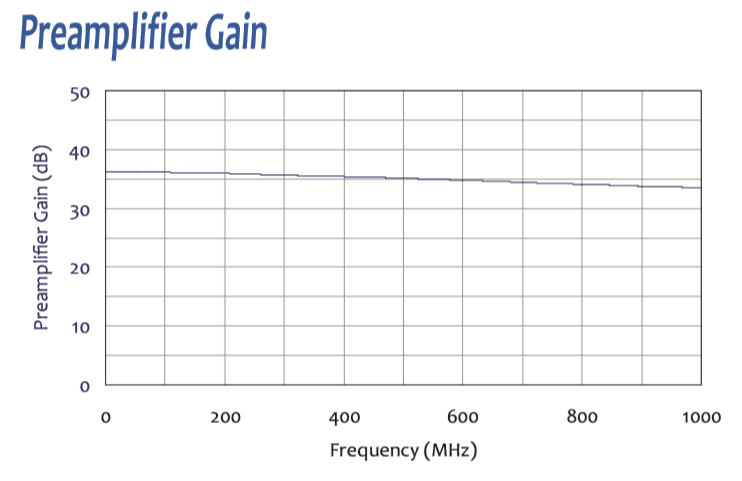
- Low noise figure < 3.3 dB with ±3 dB gain flatness; output power +18.3 dBm at 1 dB compression and +32 dBm IP3 for excellent linearity over the full band.
- Covers the entire FCC Part 15, CISPR 22 / CISPR 32 / EN 55032, FCC Part 18 ISM, MIL-STD-461 RE102 radiated emissions test bands up to 1 GHz.
- Place at the receive antenna on OATS, SAC, or FAC test sites to compensate for long coaxial cable losses and pull weak emissions above the EMI receiver noise floor.
- Ideal for commercial electronics, IT equipment, multimedia, ITE, lighting, automotive (CISPR 25 below 1 GHz), and pre-compliance scans on Biconical and Log Periodic antennas.
- Compact form factor — 2.3″ × 6.6″ × 8.3″ (6 × 16.7 × 21 cm), 3.2 lbs (1.45 kg) durable aluminum housing with 50Ω precision N-type female connectors.
- 13+ hours per charge on internal NiMH battery or external 15 VDC AC adapter; battery operation eliminates AC-derived ground-loop noise during sensitive measurements.
- Individually NIST-traceable calibrated; ISO 17025 calibration available on request. Three-year warranty.
Features
- ▸ Wideband EMI/EMC preamplifier covering 1 MHz to 1 GHz — the workhorse preamp for the principal radiated- and conducted-emissions bands used by FCC Part 15, CISPR 22 / 32, and EN 55022 / 55032.
- ▸ High 33 dB gain (±3 dB) with low 3.3 dB noise figure — provides substantial sensitivity improvement while contributing minimal additional noise to the overall measurement system.
- ▸ Linear input range <-30 dBµV to 89 dBµV — wide dynamic range covers everything from near-noise-floor signals to strong DUT fundamentals without compression.
- ▸ +18.3 dBm output @ 1 dB compression, +32 dBm IP3 — high output linearity prevents intermodulation distortion artifacts when measuring DUTs with strong fundamentals alongside weak harmonics.
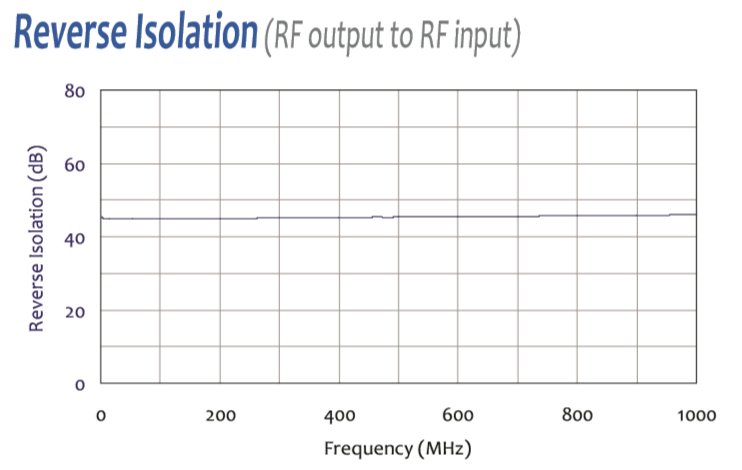
- ▸ Excellent reverse isolation >40 dB — protects sensitive antennas, LISNs, and near-field probes from local oscillator leakage out of the connected EMI receiver.
- ▸ Precision 50Ω N-type (female) input/output connectors — standard interface for connection to broadband antennas (biconical, log-periodic, hybrid) and EMI receivers.
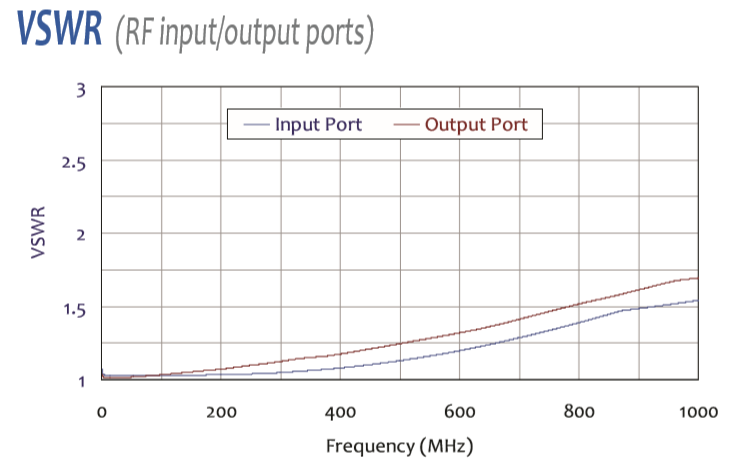
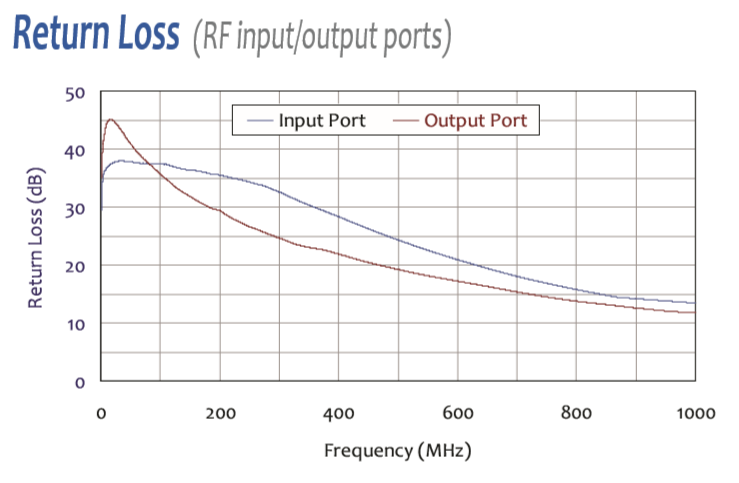
- ▸ VSWR 1.69:1 max / 1.25:1 average; return loss 29.5 dB min — excellent impedance match minimizes reflections that would otherwise distort calibrated antenna factor data.
- ▸ Battery operation >13 hours per charge — internal battery pack eliminates external power cabling that could couple noise into sensitive measurements; AC adapter operation is also available.
- ▸ Battery and charge indicators — front-panel LEDs provide visual confirmation of operational status during chamber operation.
- ▸ Pairs with broadband EMC antennas — ideal companion for biconical (AB-300M, AB-900A), log-periodic (ALP-100, ALC-100), and CombiLog (AC-220) antennas during far-field radiated emissions testing on OATS, SAC, or FAC.
- ▸ Compensates for long coaxial cable runs — placing the PAM-103 near the antenna or LISN improves signal-to-noise ratio before any cable losses; especially important on antenna masts or extended OATS setups.
- ▸ Durable aluminum housing — rugged bench-top construction designed for daily test-lab use; 0° to 40° C operating temperature range.
- ▸ Individually calibrated, NIST-traceable — calibration data and certificate ship with each unit; ISO 17025 accredited calibration available on request.
- ▸ Three-year standard warranty — backed by manufacturer support.
Specifications
| Model | PAM-103 |
|---|---|
| Application | EMI / EMC Measurements (broadband, sub-1 GHz) |
| Frequency Range | 1 MHz to 1 GHz |
| Gain | 33 dB (± 3 dB) |
| Noise Figure | < 3.3 dB |
| Linear RF Input Range | < -30 dBµV to 89 dBµV |
| Input Sensitivity | < -30 dBµV (< 31.6 nV) |
| Output Power @ 1 dB Compression | +18.3 dBm |
| Output @ 3 dB Intercept Point (IP3) | +32 dBm |
| VSWR (Input/Output) | 1.69:1 max, 1.25:1 average |
| Return Loss (Input/Output) | 29.5 dB min, 44 dB average |
| Reverse Isolation | > 40 dB (output port to input port) |
| Maximum RF Input | 107 dBµV (225 mV), 0 dBm (1 mW), 2 VDC |
| RF Connectors | 50 Ω N-Type (female) |
| Operating Temperature | 0° to 40° C (32° to 104° F) |
| Power Input | 15 VDC, 500 mA (unregulated) |
| Battery Runtime | > 13 hours (with new, fully charged batteries) |
| Dimensions (H × W × D) | 2.3″ × 6.6″ × 8.3″ (6 × 16.7 × 21 cm) |
| Weight | 3.2 lbs (1.45 kg) |
| Calibration | Individually calibrated, NIST traceable; ISO 17025 accredited available on request |
| Warranty | Three-year standard warranty |
All values are typical, unless specified. All specifications are subject to change without notice.
🔍 Not Sure Which Preamplifier You Need?
Find the perfect Com-Power preamplifier for your EMC testing needs with our interactive finder wizard. Filter by frequency range, gain, noise figure, and application to match your exact requirements.
Find Your Preamplifier →PAM-103 Wideband Preamplifier – Frequently Asked Questions
1. What is the PAM-103 preamplifier and what is it designed for?
The PAM-103 is a low-noise, high-gain wideband preamplifier covering 1 MHz to 1 GHz with 33 dB of gain. It is designed to amplify weak signals captured by EMI receive antennas, near-field probes, LISNs, and current probes during EMC emissions measurements. Its role is to improve measurement system sensitivity so that weak DUT emissions in the HF, VHF, and UHF bands can be seen clearly above the noise floor of an EMI receiver or spectrum analyzer.
2. Why is the 1 MHz to 1 GHz range important in EMC testing?
This range covers the heart of the legacy commercial and military EMC spectrum: CISPR and FCC radiated emissions from 30 MHz to 1 GHz, CISPR conducted emissions from 1 to 30 MHz, MIL-STD-461 RE102 from 2 MHz upward, and DO-160 equivalents. The majority of EMI energy from digital logic, switch-mode power supplies, microcontroller clocks, motor drives, and lower-band wireless systems lives in this range. Before testing moved above 1 GHz for modern high-speed and wireless products, a 1 MHz to 1 GHz preamp was the single most important piece of front-end amplification in an EMC lab, and it remains foundational today.
3. How does the PAM-103 differ from the PAL-010?
The PAL-010 covers 100 Hz to 30 MHz, while the PAM-103 covers 1 MHz to 1 GHz. They overlap only in the 1–30 MHz band, and each is optimized for its own range. The PAL-010 is the right choice for low-frequency conducted emissions and audio-band work; the PAM-103 is the right choice for radiated emissions from 30 MHz to 1 GHz and higher-frequency conducted work. Labs that need full-spectrum coverage commonly keep both on the bench.
4. How does the PAM-103 compare with the PAM-6000 and PAM-118A?
The three preamps are complementary. The PAM-103 covers 1 MHz to 1 GHz. The PAM-6000 starts where the PAM-103 ends, covering 1 to 6 GHz for modern wideband radiated testing. The PAM-118A overlaps at 500 MHz and extends to 18 GHz for microwave and wireless device work. Because no single preamp can cover the full EMC range cleanly, most compliance-grade labs use a combination: PAM-103 for the classic CISPR/FCC band, PAM-6000 or PAM-118A above 1 GHz, and a PAL-010 for anything below 1 MHz.
5. What are the biggest real-world workflow advantages of the PAM-103?
A 13+ hour battery runtime per charge means it can stay in the chamber near the antenna or LISN without running power cables through shielded bulkheads. Individual NIST-traceable calibration data can be loaded into the receiver for automatic correction, eliminating hand math. A noise figure below 3.3 dB combined with 33 dB of gain means the system sensitivity gain is real rather than cosmetic. For labs running long scans over 30 MHz to 1 GHz for compliance, these factors together cut measurement time and reduce the number of retests caused by borderline readings.
6. What standards and measurement frameworks does the PAM-103 support?
The PAM-103 is used in measurements under FCC Part 15, CISPR 11, CISPR 14, CISPR 22 / 32, EN 55011, EN 55014, EN 55022 / 32, MIL-STD-461 (RE102, CE102), RTCA DO-160, and ISO 11452 series where applicable. It supports both CISPR 16 conducted measurements (in the upper portion of its range) and CISPR 16 radiated measurements from 30 MHz to 1 GHz. Each unit ships with NIST-traceable calibration, and ISO/IEC 17025 accredited calibration is available as an option for labs under accredited quality systems.
7. How is the PAM-103 used for radiated emissions measurements?
For radiated emissions, the PAM-103 sits between the receive antenna — a biconical, log-periodic, or hybrid like the AC-220 or ACL-6000 — and the EMI receiver or spectrum analyzer. Placing it as close to the antenna as possible is the right approach because cable loss above 100 MHz starts to become significant, and amplifying before the cable preserves signal-to-noise ratio. On an antenna mast where preamplifier placement is difficult, the PAM-103 can alternatively be placed at the receiver input with reasonable but not optimal results.
8. How is the PAM-103 used in conducted emissions and current-probe measurements?
For LISN-based conducted emissions, the PAM-103 is inserted between the LISN RF port (often with a transient limiter in between) and the receiver to improve visibility of weak harmonics and near-limit signals. For current probe measurements, its 33 dB gain is especially useful because current probes typically have transfer impedance that drops with frequency, making upper-band content difficult to see. In both cases, the preamp improves the detectability of low-level DUT content that otherwise blends into the receiver noise.
9. Why is a 1.69:1 VSWR specification important?
A low input and output VSWR keeps the PAM-103 from introducing measurement error through mismatch between the antenna/LISN source and the receiver load. High VSWR causes standing waves, reflected power, and frequency-dependent gain ripple that distort the measured emissions spectrum. The PAM-103's 1.69:1 maximum VSWR (1.25:1 typical) means it presents a clean 50-ohm interface throughout its frequency range, so measurements are repeatable and consistent with system-level uncertainty budgets.
10. What does a +18.3 dBm output at 1 dB compression mean, and why does it matter?
This is the 1 dB compression point (P1dB) — the output power at which the preamplifier's gain starts to deviate from its small-signal value by 1 dB. Above this point, the amplifier is no longer linear and generates spurious intermodulation products that the receiver will report as if they were real DUT emissions. A P1dB of +18.3 dBm gives the PAM-103 enough headroom to handle broadband ambient signals (like FM broadcast in the 88–108 MHz band) without generating false intermodulation. For labs working on open-area test sites or in imperfectly shielded chambers, this headroom is important.
11. What kinds of real-world products are good candidates for PAM-103 testing?
The PAM-103 is useful for essentially any consumer, industrial, automotive, medical, or IT product with emissions in the 30 MHz to 1 GHz range. Specific examples include IoT devices, Wi-Fi and Bluetooth products below 1 GHz, broadcast receivers, remote controls, home automation gear, microcontroller-based appliances, motor controllers, automotive body electronics, medical monitors, and industrial control systems. It is also used for near-field troubleshooting of PCBs during design validation, where a near-field probe feeding the PAM-103 can locate specific noise sources on a dense circuit board.
12. Can the PAM-103 be used with near-field probes and current probes?
Yes. Near-field probe output levels can be extremely low, especially for E-field probes at lower frequencies, so a 33 dB preamp with low noise figure makes the difference between being able to localize a noise source on a PCB and not seeing anything at all. The PAM-103 is commonly paired with near-field probe kits like the PS-500 for EMI debug work. For current probes — CLCE-100, CLCE-200, CLCE-400 series and similar — the PAM-103 compensates for probe transfer impedance losses, particularly at the high end of the probe's range.
13. Why do individual calibration and NIST traceability matter for the PAM-103?
Each PAM-103 is individually calibrated with gain-versus-frequency data traceable to NIST. Even though units are nominally 33 dB, real-world gain varies across the band by several tenths of a dB unit to unit. Compliance measurements require that these variations be corrected in the final reported value, which is why individual calibration data is essential rather than optional. ISO/IEC 17025 accredited calibration is available for labs that need accredited traceability under a formal quality system. Annual recalibration is the typical practice.
14. What mechanical and RF interface details matter for daily use of the PAM-103?
The PAM-103 uses 50-ohm N-type female connectors on both input and output, which are the standard EMC lab interface and far more mechanically robust than BNC. The unit is compact (2.3" x 6.6" x 8.3") and light (3.2 lbs / 1.45 kg), so it can ride on a tripod near the antenna or sit on the LISN without creating a mechanical burden. A maximum RF input of +0 dBm / 107 dBµV means users should always place a transient limiter between the LISN and the PAM-103 on conducted emissions setups to protect the preamp from switch-on transients.
15. When is the PAM-103 a better choice than a higher-frequency preamplifier?
The PAM-103 is the better choice when your testing lives in the classic 30 MHz to 1 GHz CISPR/FCC band that continues to be the bulk of commercial compliance work. Its noise figure is optimized for that band, its gain is flat across it, and its VSWR is clean. A microwave preamp like the PAM-118A is simply the wrong tool below its 500 MHz lower frequency, and its gain specs are not guaranteed there. Labs whose DUT emissions are concentrated below 1 GHz — which remains most labs — will find the PAM-103 the best single-preamp solution for daily use.
16. Why would an EMC lab choose the PAM-103 as a long-term investment?
The PAM-103 is a workhorse. It covers the most heavily used EMC band, offers long battery life for flexible setups, includes NIST-traceable calibration, carries optional ISO/IEC 17025 accredited calibration, and presents a clean 50-ohm N-type interface that fits into any test chain. Its 33 dB gain, low noise figure, and strong linearity make it suitable for both pre-compliance and full-compliance measurements. As EMC testing increasingly spans wider bands with multiple preamps stacked across the spectrum, the PAM-103 remains the reliable middle of the chain that labs keep using year after year.


Quote Request
Other EMC Test Equipment
- Absorbing Clamps
- Antenna Kits
- Antenna Masts - Automated and Manual
- Antennas
- Bulk Current Injection probes
- CDNs - Coupling Decoupling Network
- Comb Generators
- Conducted Immunity Test Systems
- Current Monitor Probes
- Current Probe Calibration Fixtures
- EM Clamps
- Feed Through Capacitor
- ISNs - Impedance Stabilization Network
- LISNs - Single Phase
- LISNs - TEMPEST
- LISNs - Three Phase
- Magnetic Field Generator
- Near Field Probes
- Power Amplifiers
- Pre-compliance Emissions Test Systems
- Preamplifiers
- Spectrum Analyzers
- Surge Generators
- System Controllers
- Transient Limiters
- Tripods For EMC
- Turntables